

Clergy sexual abuse
Opacity, secrecy and complicity in the Catholic Church forces forensic work to try to grasp the true measure of the clergy sexual abuse crisis.
Appointing new bishops, improving formation at seminaries and transparency in dealing with abuse are Leo XIV’s major challenges.
Despite Leo XIV’s recent call to Cardinals to pay attention to victims, doubts remain as to how far he will go to address the root causes of the abuse crisis.
Over the last three weeks, this series has offered an equal number of installments dealing with key data about the sustainability of the Catholic Church in the context of the clergy sexual abuse crisis.
First, it looked at the 400 bishops Pope Leo XIV must appoint in the coming months, some of them in key sees such as Chicago, Miami, Mexico City, Guadalajara, among others.
Then, it went over the seminary-to-priesthood pipeline and the kind of challenges Leo XIV, and the Catholic Church confront nowadays, from hollow seminaries in Germany, Canada, and even some regions of the United States and France, to the boom of vocations in contexts ranging from the dysfunctional education systems and labor markets in Africa to the conflictive Church-State relation in Vietnam
Last week, the series went over data about the appointment of the so-called apostolic administrator, a Catholic Church official designed by the Holy See as a sort of caretaker of a diocese, and how such appointments, too many, and rather obscure to easily keep track of them.
More so, as they used to be some kind of oddity, the type of appointment done in rather dire conditions, as the People’s Republic of China or in the countries behind the so-called Iron Curtain in Eastern Europe by the end of the 20th century.
As told in that piece, what comes out of a non-probabilistic sample of all the appointments of apostolic administrators in the months of January from 1979 through 2025, is the realization that even if such designations are still in use to deal with difficult Church-State settings, nowadays the Catholic Church uses them to deal with dioceses affected, at least partially, by the clergy sexual abuse crisis.
Unlike what happens in democratic governance where there is some public record of the kind of decisions made to address certain issues, the Catholic Church, as many other religious organizations, relies on mechanisms such as the apostolic administrator to address the issue in a rather opaque fashion.
Opacity as normal
The very need to trace the use of this kind of appointment reflects the opacity with which the Catholic Church deals with its issues of internal governance. Had the Church openly explain why some dioceses remain vacant and under apostolic administrators as caretakers, there will be no need to do this forensic-like work.
Moreover, had the Catholic Church openly admit the need to rely on the apostolic administrator to address the effects of the crisis, there will be a better, more transparent, record as to what the Papacy and other organs within that church have done to address the issue. The way it has happened, there are only hypotheses about the true scale of the crisis and the specific tools the hierarchy has been using to address it.
Previous installments of this series have followed a similar approach to try to gauge the true reach of the clergy sexual abuse crisis in the Catholic Church by looking at the Catholic bishops “early resignations.” Theoretically, after the Second Vatican Council, a gathering of roughly two-thousand bishops back in the 1960s, all bishops must tender a letter of resignation on the day they reach 75.
Usually, as a matter of discipline and decorum, the letter is sent some weeks before even if they are only made public once the bishop reaches 75. An early resignation has become, in that regard, a tell-sign of some kind of issue in the diocese where the resignation happens.
The story linked before this paragraph, published in 2023, tracked down the first 100 of such early resignations. It is impossible to know if they are actually all of such “early resignations,” since when dealing with these issues, Rome has preferred to hide behind all kinds of euphemisms the “accepting,” more like forcing out, of the early resignations of its bishops.
It is only when bishops breakaway from established doctrine on matters such as the ordination of females as priests, when Rome openly states the causes for such resignation, but even in those cases, the official record lacks details.
Australian bishop William Martin Morris’s entry at Catholic Hierarchy, clearly states he was “removed” from office in 2011, and it is known that he was forced out because of his position on the ordination of females, but there is no clear registry of that.
But even noted the records of noted predators such as Chilean Francisco José Cox Huneeus’s, remained unblemished for many years.
Officially, Cox Huneeus’s case was only a resignation, an “early resignation” at 63 for many years until, in a rather belated move, after Pope Francis’s Chilean Waterloo, as proven by the empty seats at the venues the Argentine Pontiff visited during his 2018 pastoral travel, Rome reopened the books on the predator former archbishop of La Serena, Chile.
That is how his entry at Catholic-Hierarchy.org changed, appearing now as “Mister Francisco José Cox Huneeus, P. Schönstatt,” as to indicate the fact that he was expelled from the priesthood by Rome.
As a sign of how things have changed on this issue, one finds something similar when going over Catholic Hierarchy’s page hosting «Mister Theodore McCarrick«’s data.
Major difference
A major difference, however, is that U.S. survivors of clergy sexual abuse had the advantage of knowing why McCarrick was defrocked after Rome published a detailed report, probably the most specific ever, about what the Vatican knew, at different points in time about McCarrick’s crimes.
There is chance the details were a response to claims made, back in 2018, that Pope Francis was somehow McCarrick’s accomplice. The claims were, at the time dangerous, because they were endorsed by a former nuncio to the United States, Carlo Maria Viganò, a now excommunicated individual who spreads all kinds of conspiracy theories, from unsubstantiated claims on vaccines to the rejection of the Second Vatican Council and the reforms it made to theology and liturgy.
The accusations were also dangerous, as they emerged at a moment when major probes in U.S. states were either recently published (Pennsylvania) or about to begin (Illinois).
But even if one takes McCarrick’s report as some pinch of transparency to protect the then reigning Pope, the fact is that when John Paul II “accepted” Cox Huneeus’s resignation back in 1997, one year before the scandal in Palm Beach, Florida, exploded, there was no acknowledgment of the scale of the clergy sexual abuse crisis in Chile.
Quite the opposite. The next ten years saw the Chilean episcopate and their bosses in Rome suppress as much as possible any evidence of what was actually happening in La Serena and almost everywhere in Chile.
In 2010, Pope Benedict XVI sent Cardinal Tarsicio Bertone to Santiago de Chile. Officially he was there to attend the festivities of Our Lady of Mount Carmel but, while being there he launched an all-out attack on gay persons as to «explain» Fernando Karadima’s and other predators’ abuses while dismissing the many mistakes and cover ups done by Rome and the national conference of Catholic bishops there.
It would be only after Pope Francis’s disastrous pastoral visit to Chile in 2018, when Cox Huneeus’s, living in Germany in some sort of golden canonical limbo, was defrocked, but with no transparency from either Rome or the Chilean national conference of bishops, as it happened with McCarrick, the same year of 2018. Only the Jesuit Chilean province was willing to provide some measure of transparency when dealing with their own predators, most notably with Renato Poblete and, later, with Felipe Berríos.
The fact that Rome needed 21 years and a global scandal to do acknowledge, even if indirectly, the extent of Cox Huneeus’s abuses is a tell sign of why it is so hard to actually assess the true scale of the clergy sexual abuse crisis, why there is a need to look for other “signs” or “symptoms” of what is actually happening.
The fact is that in perpetuating this behavior, Rome helps the predators, while undermining its own authority and credibility when dealing with these issues. Forcing the kind of forensic, detective-like, indirect search for what is actually happening defeats the very purpose of an institution that, one would guess, has an interest in honesty, and in protecting its own members.
The sad reality is that the approach followed by Rome cements the notion that it is not really possible to trust, and that there is a need to figure out, on one’s own way, what is the true scale of clergy sexual abuse crisis.
More recently, in January of 2025, the series published an update to that list, identifying the 30 bishops Pope Francis forced out of office during 2023 and 2024, available after this paragraph.
The scale of the damage
One of many possible examples of the opacity with which these resignations happen is that of now deceased Cardinal and former archbishop of Boston, Bernard Law. When the scandal in the capital of Massachusetts was unbearable, John Paul II “accepted Law’s resignation.”
On December 13, 2002, the Bollettino (content in Italian), the official summary of information for appointments and resignations in the Catholic Church, acknowledges Law’s resignation, but there is no explanation as to why he did so when he was 71.
That very day, John Paul II, appointed Richard Gerard Lennon, one of Law’s auxiliaries in Boston, as apostolic administrator, a position he held until July 1, 2003, when Seán Patrick O’Malley became head of the archdiocese.
It is known that after his resignation to Boston, Law went to Rome, although it would be only two years after his resignation that he was appointed archpriest at the Basilica of Saint Mary the Major, where he would spend his last years as active cleric, until 2011, when he reached 80.
He remained in Rome until his death in 2017, but there is no trace in the official public Vatican records of the many misdeeds, to say the least, that ultimately bankrupted the Archdiocese of Boston. A measure of the damage is how the number of active priests in that archdiocese went from 1,678 in 2002, when Law left, to 949 in 2023, the most recent data available, according to its own records as published in Catholic Hierarchy.
That represents, by the way, a 43 percent loss in the number of priests, mirroring other losses in the New England see and providing a proxy of sorts of the scale of what Law allowed to happen there since he took over, in the mid-1980s, at 52, Boston, when he reached the pinnacle of his career, after being promoted, a true “wonder boy,” at 42, by Pope Paul VI to bishop of Springfield-Cape Girardeau, Mississippi in 1973.
In a reversal of fortune mirroring the fate of the Catholic Church at large, Law’s escape to Rome was John Paul II’s attempt at protecting him from a potential investigation in the United States about his role in the large-scale clergy sexual abuse in the archdiocese of Boston.
Even if there are mechanisms to follow the early resignations of bishops, the sigil with which these changes are recorded and the fact that there is no transparency as to the real reasons for the resignations makes it hard to actually grasp the true scale of the crisis.
In that regard, this installment offers additional evidence about the use of the apostolic administrators and its potential role as a proxy to understand the true reach of the clergy sexual abuse crisis and its potential implications for the future of the Catholic Church, while bringing together the main challenges Leo XIV faces.
Additional findings
Even if limited, the Excel book with the data from the snapshots of all the last 46 months of January is available here at Scribd. Later, if possible, I will complete the database for the twelve months of each year.
The dataset documents 267 administrative appointments. There is a statistically significant shift in the volume of these appointments centered around the 1998 Palm Beach crisis, and more so after Pope Francis issued Vos Estis Lux Mundi.
The next table presents the information from a similar number of “lenses” or approaches: frequency and the main drivers of the apostolic administrators’ appointment. The expectation is to let the reader grasp the magnitude of the change as registered in the data from the months of January in the period under consideration.
There were 118 of such appointments in the 2019–2025 period as compared to 40 in in the 1979-1997, before Palm Beach. The table summarizes these findings and highlights how the frequency of these appointments has accelerated. If for the first two decades of John Paul II’s tenure the appointments were roughly two administrators per year, him and his successors appointed 5.19 administrators per year from 1998 through 2018, and the second half of Pope Francis’s tenure saw that metric go through the roof with almost 17 appointments per year. That is an 800 percent increment from the 1979-1997 period.
The appointments in the last seven years of the sample (2019-25), represent 44.19 percent of the entire 46-year record.
If the data discussed so far represent a stethoscope placed on the Catholic Church’s chest only in January, the heartbeat captured is erratic and racing. It is clear that an EKG/ECG would be better, but sometimes a stethoscope is all there is.
These 267 cases are not the full history; they are a forensic mapping of friction points. The fact that 44.19 percent of the 46-year sample occurs from 2019 to 2025 is a trend and a symptom of the need for a new method to select bishops.
The Vatican is now intervening in dioceses at a rate nearly eight times higher than it did during the first half of John Paul II’s papacy. What was once an emergency “last resort” to deal with the likes of Mao Dzedong, is now tool regularly used to deal with troubled dioceses.
Despite the limitations of the model used in this installment, looking only at the month of January across 46 years, it is possible to find trends that talk about a seismic change in Church governance.
There is nothing “seasonal” about January in the Catholic Church. There is no “January-specific” reason for a diocese to go into administration (deaths and resignations occur year-round). Despite its limits, using data only from the months of January allows to go deeper into John Paul II’s and Benedict XVI’s tenures as Pope as to find what has really changed after the Palm Beach fiasco and, more precisely, after Pope Francis’s tenure.
Who are the administrators?
The profile of the individual appointed as administrator has shifted from local priests to high-ranking or retired bishops able to deal the issues happening in the dioceses. Although it is impossible to provide a thorough assessment the limited analysis performed with the data from the months of January talks of less priests being appointed as administrations while more high-ranking prelates take over the task. It is noticeable a growing number of Cardinals and emeritus bishops, prelates over 75 and already retired, taking over as administrators to the dioceses with “issues.”
It is also noticeable an elite taskforce of sorts, a small group of “fixers,” sent to dioceses in trouble. Some of them even take over simultaneous jurisdictions. That is the case of Cardinal Besungu or they do so in rapid succession, as in the case of bishop Kurt Richard Burnette, Canadian Jesuit Terrence Prendergast, Mexican archbishop Rogelio Cabrera López with three appointments each.
The data shows the migration of the apostolic administrator tool from a geopolitical survival tactic to a global administrative policy. After going over the snapshots of these 46 months of January, it is possible to see that up until the 1980s, Rome used apostolic administrators for the most part in countries such as the People’s Republic of China, later in North Korea to deal with the institutional constraints Catholicism and other religions face there.
That is how one should interpret the 24 cases in China and North Korea, over eight percent of the total. Historically, these were the longest-duration appointments (e.g., Joseph Li Mingshu at 24 years and Wang Chengli at 22 years), utilized when episcopal consecration was politically impossible. Something similar emerges in countries where Catholicism is the faith of small minorities, such as Iran, Iraq, Turkey, Lebanon, Israel, and Greece.
The political nature of the appointments was far more evident at the time of the German reunification, when the map of Catholic dioceses took its current shape there. The same could be said of appointments in countries with small Catholic minorities in the European East formerly under the control of soviet-aligned regimes.
Towards a geography of the sexual abuse crisis
It is within that context that this series is looking at the appointments of apostolic administrators as a proxy of the scale of the global clergy sexual abuse crisis. It is not that the Catholic Church is the only one institution or “social setting” where sexual abuse happens.
A few weeks ago, this series went over the ongoing crisis at the Anglican Communion in the story linked bellow, where the role of female clergy in top positions in that Church provides little or no comfort for the wings of the Catholic Church hoping that a change in the rules for ordination would provide some relief to the crisis in their religious organization, quite the opposite.
Also, when paying attention to what currently happens in the United States and France. In California, one is able to see how there are also large numbers of victims of secular therapists, whose victims are trying to raise money to produce a documentary series to tell their own story of violence coming from those who swore to help them. In France there is growing evidence about the large scale of abuse happening within the French households, schools, and in sports federations (content in French).
It is hard to think of any context of milieu actually free from abuse. It is just that this series main target has been the clergy sexual abuse crisis in the Catholic Church and in that is why the series strives at figuring out the root causes of the issue and what are the specific responses of the institution involved in this type of cases.
What the data shows in the next three maps is how, having analyzed only the data for the appointment of apostolic administrators in the month of January from 1979 through 2025, what emerges is potential evidence of what are regions most affected by the crisis.
It is clear that in the first two decades, going from 1979, the first full year of John Paul II’s tenure as Pope, to 1998 (see the map below), the year the crisis at the diocese of Palm Beach, Florida, emerged, the appointment of apostolic administrators was a tool mostly used to deal with issues affecting China and some other countries with deeply entrenched Church-State conflicts.
After the revelations in Palm Beach and until 2019, the year when Pope Francis’s issued Vos Estis Lux Mundi, his attempt at reforming the way the Catholic Church deals with clergy sexual abuse, there was a change in the patterns. China remains a hot spot for the appointment of apostolic administrators, but other countries emerge, as the map below proves.
Even if it would be possible to think about other reasons for the appointment of such figures, as it happened in Caracas in 2018, the dioceses where the appointments happened are not as representative of a deeply entrenched Church-State conflict as the capital of Venezuela was at the time.
Finally, in the map further below, it is possible to see the new geography of the use of the apostolic administrator, as a tool repurposed by the Catholic Church to rein in some of the most negative aspects of its own model of self-governance.
Given the uncertainty associated to the use of a non-probabilistic sample drawn from the appointments happening, for the most part, over the months of January of the period under consideration, it is impossible, and the opacity with which the Catholic Church uses this and other tools, it is impossible to assert that the map of the use of the apostolic administrator is a reflection of the map of the clergy sexual abuse crisis, but there is chance it is.
The aforementioned table summarizes the information from the three previous maps.
The partial findings stemming from the analysis of the apostolic administrator appointments for the months of January in the period under consideration are not robust enough to claim victory, which is to say, the ability to fully connect early resignations stemming from the clergy sexual abuse crisis and connect those, ultimately, to the appointment of apostolic administrators, but it is a step in the right direction as there are overlaps when one goes over the stories published first in 2023 and 2025 about the “early resignations” of bishops facing issues in their dioceses.
Some U.S., Chilean, Mexican, French, and Irish dioceses are among the most notable, but to fully assert that notion a full analysis of each year would be required.
A case in point would be, as far as Chile is concerned, that of Osorno. On some respects, that diocese would be a major site of the clergy sexual abuse crisis. It saw an appointed bishop, Juan de la Cruz Barros Madrid, forced out of office when he was a few days short of 62.
His resignation was the byproduct of never before seen, especially in the Catholic Spanish-speaking world, sustained mobilizations by local laypersons who publicly repudiated him for over three years (2015 through 2018). After that, the diocese was under the extended tenure, almost two years, of an apostolic administrator, Jorge Enrique Concha Cayuqueo, who is now, after five years in Osorno, the bishop of Temuco.
Dangerous Liaisons
However, what forced Barros Madrid out of office were not crimes or misdeeds in Osorno. It was his long-standing association with Chilean super-predator Fernando Karadima, who had in Barros a disciple and an accomplice for the sustained abuse of underage males in Santiago, the capital of Chile.
Given the sigil and scarce information with which the Catholic Church reports the early resignation of bishops such as Barros Madrid as much as the appointment of apostolic administrators, as Concha Cayuqueo was, there is no way for the untrained reader of the records of any of those two bishops in Catholic Hierarchy, GCatholic, or even in official Vatican sources such as the Bollettino, the Annuario Pontificio or the Acta Apostolica Saedis, to figure what lies behind their, otherwise, sanitized resignations and appointments.
To actually grasp what happened there and elsewhere in Chile with the so-called “Karadima’s bishops” and with other bishops accused of either abusing or aiding and abetting abuse, one needs to do the kind of forensic work this series is all about.
It should come as no surprise that survivors of clergy sexual abuse are less willing than ever to believe that Rome is actually willing to address their needs. In countries that, at least until 2024, had functional systems of justice, as the United States, was there was an expectation that a solution could come from the government, whether national or subnational.
As it stands now the political situation in the United States it is hard to imagine any improvement, at least not at the national level. If they happen, it will be at the subnational, state, level, where there is still the appetite and ability of the local legislative and judiciary powers to address the issues.
Elsewhere, it is even harder to imagine possible scenarios, leaving survivors and their relatives, is a deep state of despair. One would guess France will continue benefiting from the renewed awareness of the true scale of the crisis brought by the Bétharram case.
In Germany, there is some hope with the diocesan reports being published over the last years, but even in other countries in Europe it is unclear what will happen next, perhaps with the exception of Spain and France. In the first case because of the agreement reached between the Ministry of Justice and the conference of Catholic bishops there, as the story linked after this paragraph explains.
On or off of the agenda?
In France because of the long duration process sparkled by the Sauvé Report that has been a topic in different installments of this series dealing with French cases.
Peter Isely, a key figure at SNAP, the Survivors Network of those Abused by Priest, published over his Facebook profile a statement calling the national governments to address the issue (available here).
How effective it will be is anybody’s guess at this point, but from it is necessary to pay attention to it devastating assessment of where the Catholic global leadership stand at this point:
- Justice is not on the agenda, This consistory brings together the very men who engineered the global cover-up of clergy sexual abuse, yet there is no plan to discipline perpetrators, no transparency, and no accountability for bishops who protected abusers.
If Isely’s assessment is true, it is possible to expect the worsening of the situation the previous installments of this subseries have documented: in increased pressure on the Pope to find suitable profiles to take over as bishops, and perhaps the most telling consequence of the abuse crisis as such, the emptying of the seminaries of the Catholic Church, as a testament of the distrust created by the clergy sexual abuse crisis.
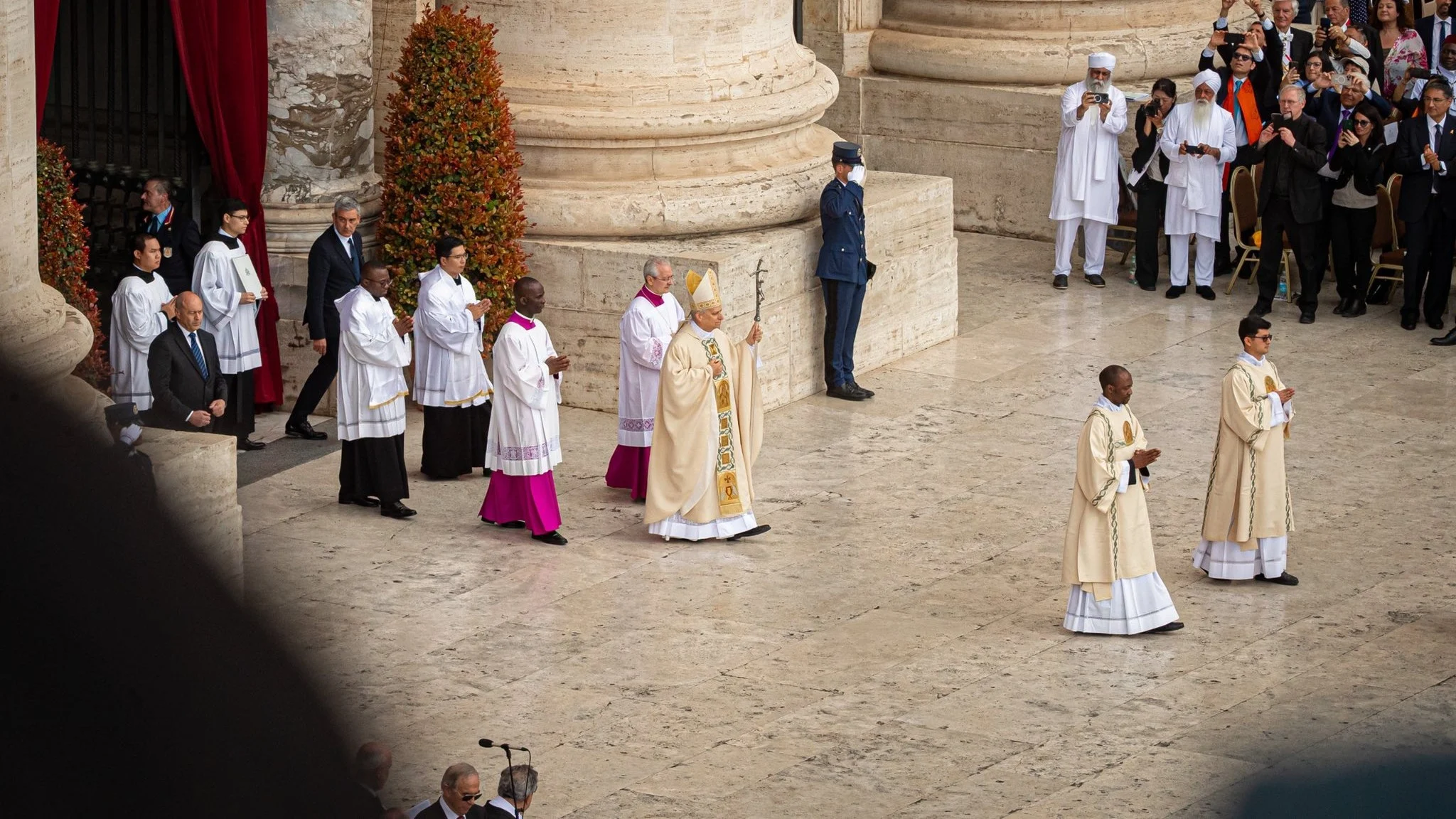
Pope Leo XIV’s opened on January 7, 2026, the Extraordinary Consistory, an official meeting of the Cardinals, with a plea to build what the news agency Reuters labeled a “more inclusive” Church. Not that Pope Prevost himself used that phrasing. He relied on more standard “Vatican language,” talking about the need to foster unity. What is relevant, however is that inclusiveness or unity require, at least some level of truth and transparency.
Both also require a thorough compromise to actually address the clergy sexual abuse crisis and that implies more transparency and avoiding as much as possible tthe attacks on victims willing to come forward, as much as on their relatives, friends, and the media willing to report on the issue.
Later, in his closing remarks to the Cardinals in Rome, Pope Prevost acknowledged the need to pay attention to the victims’ pain:
- Even though it was not a specific topic of dialogue in our meeting, I want to mention the problem that continues to be a real wound in the life of the Church in many places today, namely the crisis caused by sexual abuse. We cannot close our eyes or hearts. I would like to say that the pain of the victims has often been greater because they did not feel welcomed or heard, and I encourage you to share this in turn with the bishops. The abuse itself causes a deep wound that may last a lifetime, but often the scandal in the Church arises from the door being closed and victims not being welcomed and closely accompanied by authentic pastors. A victim recently told me that the most painful thing for her was precisely that no bishop wanted to listen to her. So here too, listening is profoundly important.
While waiting for what could happen, what this subseries has been able to prove is that even with the very limited amount of data (8.33 percent) of all the appointments of apostolic administrators, that is where the new “Iron Curtain” for the Catholic Church lies. The Catholic hierarchy no longer use them to deal with challenges from Moscow and its satellite regimes as it happened in the second half of 20th century. It is a new curtain built the Catholic Church itself through its own management of the clergy sexual abuse crisis.
As acknowledged by Leo XIV the crisis hurts old bastions of Catholicism, such as Belgium, and other European countries that were key to actually turn that Church into a global powerhouse. In the piece dealing with the pressure stemming from the appointment of bishops Belgium offered an example of the kind of stress the Catholic Church faces there, similar to those in other European and even Latin American countries.
There is also a clear need to figure out what are the actual priorities to build trust with the faithful: Chastising bishops such as Morris because of his heterodox stance on the ordination of females or acknowledging the kind of damage brought by Cox Huneeus, McCarrick, and many others who even if expelled from the priesthood before their deaths, retain a clear record in Catholic archives?
Then, there is the issue of the long-term sustainability of the seminary-to-priesthood pipeline. Are countries such as Angola and Madagascar a “safe bet” for the future of the Catholic Church?
One has to wonder how sophisticated needs to be the formation in seminaries in those countries in the Global South to actually compensate for the losses in the United States, France, Germany, and even Latin American countries, where it is more and more frequent to find priests born in Africa taking over duties that, less than 30 years ago, were the province of the local clergy.
How many African and Asian lads would have to enter seminaries in Luanda or Hanoi to replace the priests required to preside over masses in empty churches in France, Canada or Germany?
Sectarian attitudes
Also, given what happened in Mexico and other Latin American countries where vocations boomed as a byproduct of a fraught Church-State relation, with orders such as the Legion of Christ using those issues to legitimize abuse and sectarian practices, how long will it take for the Church in Africa or Asia to stumble over the same stone.
One can find traces of those sectarian attitudes in the attacks bishops, priests, and even seminarians in Africa launched against Pope Francis when he approved Fiducia Supplicans, the document authorizing the informal blessings of “irregular couples” by Catholic priests. The attacks on Francis flirted with regular themes in Catholic sectarian practices, such as that of calling into question the identity or the mental sanity of the reigning Pope.
The data seems to imply that is not a sustainable model, since the vocational boom in the Global South seems to be dependent on unemployment, violence, and political instability, but also because the pews in the Global North are increasingly empty.
As far as it is possible to interpret the data, appointing apostolic administrators is no longer a tool for political survival in places such as the 20th century People’s Republic of China. It is a tool for the concealment of crimes or at least of a crisis. The 800 percent growth rate in these appointments, is a sign of the scale of the crisis.
The reason why it is impossible to present this as a tool for actually addressing the sexual abuse crisis is the opacity with which it is used, much like the appointment of a coadjutor. The only type of Vatican intervention that acknowledges something is amiss in a given diocese or order is the apostolic visitation.
It is not that appointing an apostolic administrator is inherently wrong. It is likely the best course of action in places such as Tijuana, Mexico; Juli, Peru; Verdun, France; or Cádiz, Spain, where there is clear evidence of trouble—expressly acknowledged in Cádiz and Verdun by the Catholic Bishops’ conference in Spain and the Apostolic Nunciature in France, respectively. This is not the case in Tijuana and Juli, where one must connect the dots, much like a detective in a crime novel.
The problem is the lack of clarity regarding why or when Rome chooses to use this type of appointment. In Juli, for instance, the secular press reported on the excesses of the promiscuous Ciro Quispe López, who, nevertheless, retains the title of emeritus. In Tijuana, the sudden death of archbishop Francisco Moreno Barrón facilitated the intervention, yet the magnitude of the problem there remains unacknowledged.
The interested observer must remain alert to the scant information Rome filters regarding these appointments. It is up to the observer to link apparently disconnected facts that are, nonetheless, linkable by their symptoms to what is occurring in these and other sees where this type of intervention is chosen. Even if the apostolic visitation leaves much to the imagination, it serves as an admission that some form of investigation is underway.
Behind the data
It is vital to remember that behind every statistic and administrative maneuver lies the lived experience of survivors and communities still grappling with the trauma of abuse. The Catholic Church’s institutional responses, while able to identify “hot spots” and send its firefighter brigade there, lack more proactive approaches in at least three areas.
The first one is that of reparations. Putting aside the United States, Canada, Australia, Ireland, Germany, and more recently France and Spain, there is real deficit in that area. Even in the case of Spain and France there is the issue of priests with credible accusations in several countries.
If a priest attacked a member of his flock in France, chances are there will be some settlement. If that same priest attacked a member of his flock in Latin America, Africa or Asia, chances are there will never be a settlement. Probably not even a formal apology.
The second one is that of actual prevention. It is hard to achieve different outcomes when the Catholic Church puts a premium in rejecting change, more so when it is clear that prevention so far has been unable to actually achieve its goals.
Finally, there is a real need to be transparent about the reasons for “early resignations” and other disciplinary measures set by the Holy See. The way “early resignations” are used nowadays, end up backfiring as bishops with legitimate health reasons to step down are confronted with the issue of how to actually convince their flocks that they are not predators trying to avoid accountability.
Other areas of concern are the extremely lengthy canonical processes and the unwillingness to actually set restrictions on priests with credible accusations.
Something similar could be said about the “enthusiasm” with which certain dioceses are willing to facilitate the impunity of accused priests. When looking at some of those processes it is unavoidable to wonder how much money a diocese should spend defending a priest in civil or penal courts.
The issue is relevant not only when thinking about other areas of interest where money is needed in any given diocese, but also when thinking about the asymmetry between a victim, hard-pressed to hire an attorney on his or her own, and how some dioceses have lawyers on retain to help their clergy.
Even if many bishops are unwilling to acknowledge it because they are more interested in helping their priests, these issues erode trust in the Church as they reveal how, when bishops are forced to choose they will almost always side with their clergy and not with the lay persons.
Overall, for as long as the Catholic Church remains unwilling to address survivors’ reparations, effective prevention and transparency in their processes, distrust and discredit will continue to grow. The recent record shows that when the institution is pressed to choose, it usually prefers protecting clergy over justice for laypersons and victims. Without deep changes, the Catholic Church’s sustainability remains in question.
A summary of this piece is available as audio after this paragraph.
Note on production: The text of this summary was written and edited solely by the author. The delivery of the audio summary was achieved using a high-quality, text-to-speech engine Microsoft Word for Web. The AI was used for voice generation only, not content creation.